Unovie designs, builds and operates custom Edge-AI Agentic Systems for next-generation manufacturing — the sensor-dense, AI-heavy, robot-heavy factories of battery, chips, space, robotics, defense and advanced energy. AgentMesh at the machine, AgentNexus across every site. Cloud-native, microservices native and secure by design. Fixed scope, fixed cost.

Next-generation factories are built dense with sensors, cameras and robots — and produce far more data than people can watch. Battery lines, chip fabs, space factories, robot lines and new shipyards also share data that can't leave the site and audits that need evidence. That is what our platform is built for.
Cell, module and pack lines watched in line — weld, formation and aging signals, with suspect parts diverted to rework. On storage fleets, early warning of thermal runaway as an alarm.
Fab utilities and supplier gas, chemical and parts plants watched from their own signals, through ramp-up and beyond. Process and design data never leave the fence.
Vehicle and satellite lines with vision QA and drafted quality records; rocket and engine test stands watched run by run, beside the qualified test system.
Robot-dense lines and the robots, drones and vessels they build: joint, motor and gearbox health at every cell, and fleet health for systems that run disconnected.
New shipyards, autonomous-vessel yards and dual-use factories — line and yard QA, machinery health and network watch, inside your enclave.
Construction, balance-of-plant and site-security monitoring on new reactor and power sites — never on reactor safety systems.
Deep-tech sites can't bolt security on later, so we didn't either. Unovie is designed from day one against NIST SP 800-53 security controls and the NIST AI Risk Management Framework — air-gapped by default, on Unovie's custom-built hardware accelerators, engineered for agentic performance, low latency and high availability, inside your security boundary.
Control families as tailored for OT by the SP 800-82r3 overlay: boundary protection, least privilege, audit, change control, integrity and supply chain — built in, not added later.
Govern, Map, Measure, Manage — every kit declares its context and lane, every change is tested on unseen cases, and the language model only drafts, guided by the Generative AI Profile.
SP 800-171 and CMMC programs, IEC 62443, fab equipment-security reviews, aerospace quality records, battery-site safety reviews: your assessor gets the evidence.
Every decision, request and change goes into the signed Evidence Log, and the Kiln publishes a nightly evidence pack — so you can show exactly what the AI did and why.
Designed against and mapped to these frameworks · compliance is determined by your assessor, not by a product
Not advisory decks. Working systems — assessed, designed, built, optimized, and supported within committed timelines.
Reference architecture & solution blueprint, scoped to a fixed outcome.
A graded proof against your data — value proven before you commit further.
Production-shaped build: data, models, testing, monitoring.
Hardened, observed, and operated — on Unovie's custom-built hardware accelerators, engineered for agentic performance, low latency and high availability.
We turn every signal a next-generation line produces — robot joints, vision, vibration, electrical, battery, test-rig and network data — into fingerprints and small, specialised models. New skills are trained as small adapters by the Kiln, on a base model that never changes, and go live only after they beat what's running on cases they've never seen.
AI built into sensor-dense, robotic lines. Connections to robot controllers, vision systems, test rigs and the factory network, designed against NIST SP 800-53 controls; Lane A acts only where a wrong call costs little; Lane B raises an alarm and a request so your safety PLC, cell controller and operator decide. Every decision is written to a signed Evidence Log.
Fast answers on small, owned hardware. A 30-millisecond decision budget at the machine, careful memory budgeting on shared-memory AMD and NVIDIA servers, compact model copies for speed and skill adapters instead of ever-bigger models.
Systems you own and can run without us — cloud-native microservices on a CNCF-conformant platform your team already knows. Air-gapped by default, built from identical shelves of servers, with data copied across shelves and the Mesh Arbiter moving work when something fails. Capex, not a metered bill — cost stays flat while accuracy improves.
Packaged jobs for next-generation lines — each a domain kit with its connections, fingerprints, rules, playbook and reports, running on AgentMesh and AgentNexus, deployed in weeks, not quarters.
Joint, servo and gearbox drift caught before it scraps parts or stops the line.
DeepVision at the cell, fused with process signals, on Jetson AGX Thor.
Weld and formation signatures in line; thermal-runaway warning on fleets.
Pumps, chillers, scrubbers and gas systems at the fab and its suppliers.
Flags to the test conductor during a run; post-test report drafted.
Agents draft non-conformance reports and quality records for sign-off.
AgentMesh keeps the fast loop at the machine. AgentNexus works at business speed across every site. Same agents, same models, same safety boundary — on Unovie's custom-built AMD or NVIDIA hardware accelerators, engineered for agentic performance, low latency and high availability.
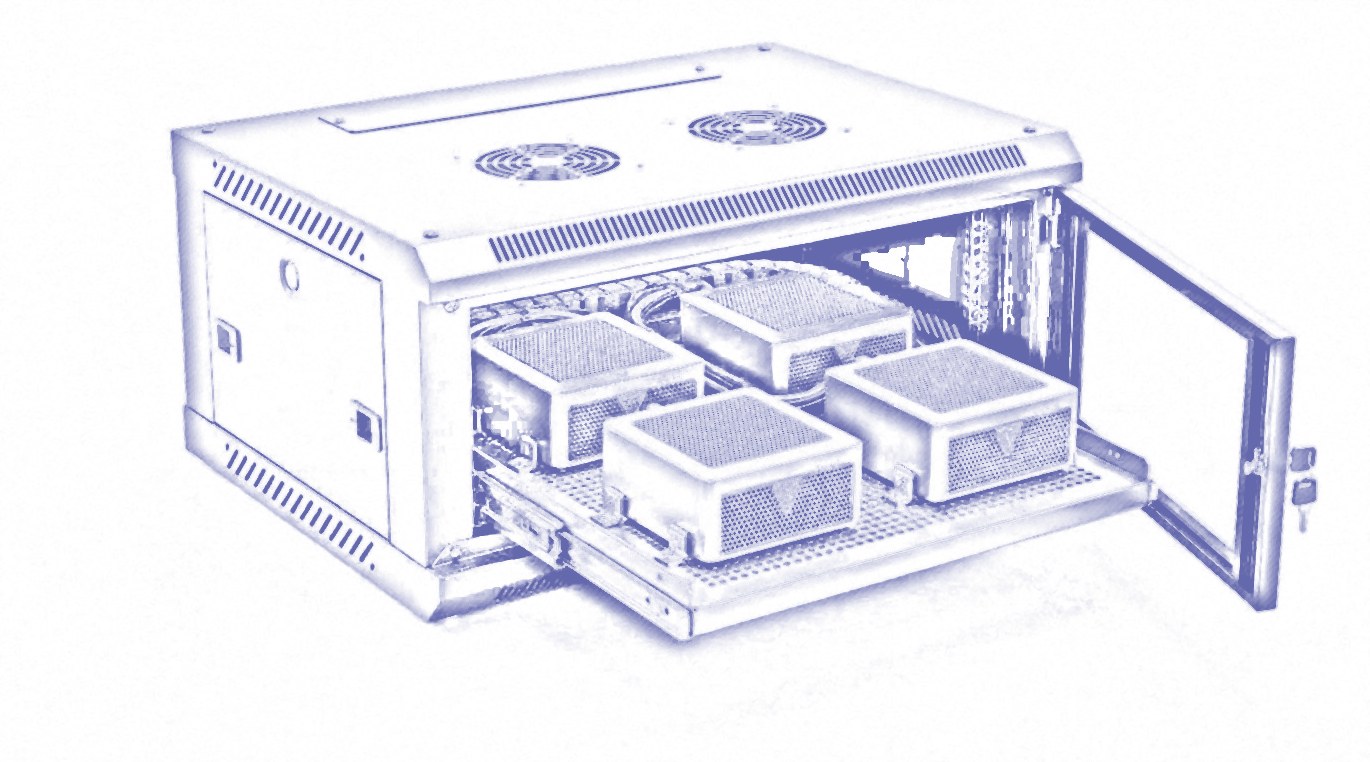
A Sovereign Pod — four servers with 2 × 10GbE networking and NVMe storage — on the factory network reads robot, vision, electrical, battery and test signals, decides inside a 30-millisecond budget, and acts only where the consequence is low. Anything safety-related becomes an alarm and a request to your PLC, safety system and operators. Every decision lands in a signed Evidence Log.
One rack in a central cabinet hosts thousands of agents in sealed sandboxes, connects to every AgentMesh pod and turns line and site events into analysis, plans, quality records and work orders within half a second. New skills are tested before they go live. It never moves equipment.
| AgentMesh | AgentNexus | |
|---|---|---|
| Where it runs | Next to the lines and cells, on the factory network | A central cabinet serving every site |
| How fast | A 30-millisecond decision budget | Answers within half a second |
| What it does | Reads robot, vision and sensor signals, decides, diverts, raises alarms and requests, drafts records | Runs agents across sites, drafts quality records and plans, learns from production |
| Architecture | Microservices on a CNCF Certified Kubernetes distribution · runs air-gapped | One CNCF-conformant cluster of 48 servers · microservices · sandboxed agents |
| Security | Designed against NIST SP 800-53 and the NIST AI RMF · air-gapped | Sealed agents · least privilege · inside your enclave |
| What it never does | Overrule your PLC, safety system or operator | Move equipment at all |
| Hardware | AMD Ryzen AI Max+ 395 · NVIDIA Jetson AGX Thor (robotics & DeepVision) · NVIDIA DGX Spark | AMD Ryzen AI Max+ 395 rack · NVIDIA DGX Spark |
The same platform on two hardware families. Unovie custom-builds the hardware accelerators for each site to meet agentic performance, low-latency and high-availability requirements — configured, tested and supported with the platform.
Sovereign factory intelligence. An AgentMesh Sovereign Pod in 3U — 2 × 10GbE networking, NVMe storage — at each site, and an AgentNexus rack for the fleet.
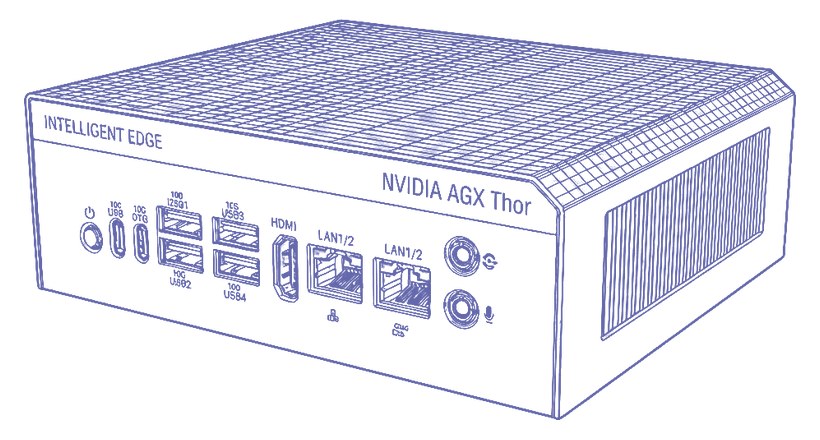
Robotics & DeepVision for fabs. Inspection, robot cells and wafer handling, at the tool.
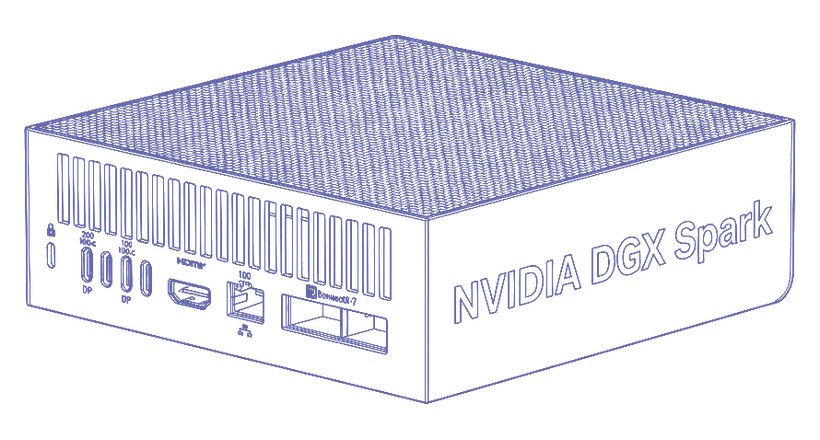
AI engineering lab. Train skill adapters, analyse test stands and run a site AgentNexus.
Full responsibility, committed timelines — every phase with enterprise-grade execution.
Workshops, ROI, value outcomes.
Roadmap, reference architecture, blueprints.
Data, models, testing, monitoring.
KPI tracking, feedback loops, reviews.
Enablement & ongoing adoption.
How the pod at the machine is organised, what happens from signal to action, how data is kept safe and what happens when a server fails.
How the rack is organised, what happens step by step, how data is kept safe and what happens when something breaks — for architects and business leaders.
How AI models actually learn — gradient descent, backprop — and why fine-tuning is the wrong reflex on the edge. 25 chapters, diagrams, real results.
The frozen-base doctrine: keep the weights fixed, adapt in context, verify against a frozen baseline — and let throughput compound the gains nightly.
Dates as announced by organisers; check before you travel.
A 6-week paid pilot on your own line — one domain kit, your data, a measured latency report — credited toward production. Tell us where you are; we'll engineer the path to production.