Robot cells, motion axes and vision stations produce a constant stream of joint, torque and image data. AgentMesh catches a drifting joint or gearbox before it scraps parts or stops the line, and keeps fleet health for drones and vessels that run disconnected and sync when they return.
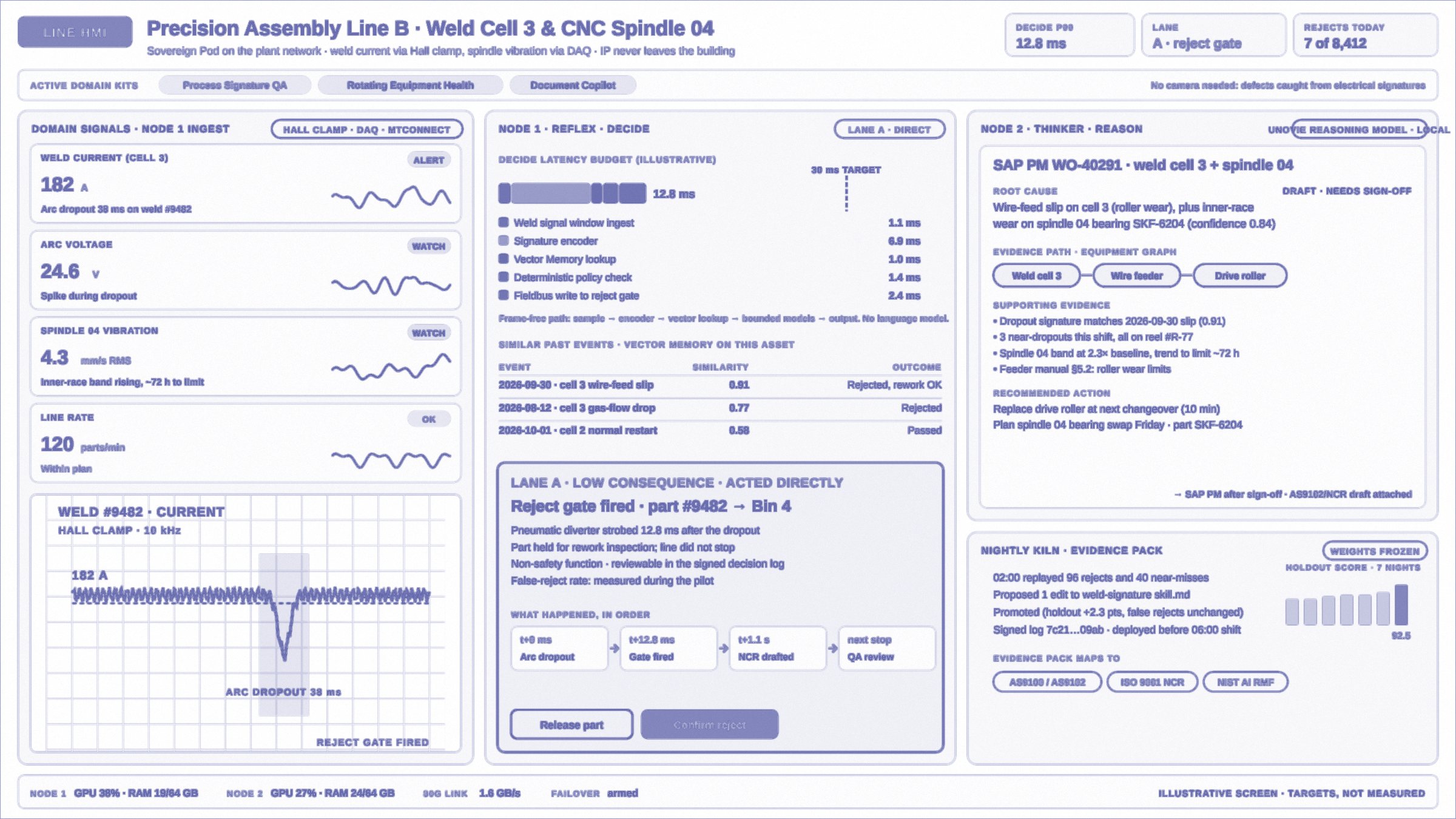
A worn gearbox or a drifting servo shows up as bad parts long before the robot faults.
Every cell streams joint current, torque, cycle and vision data. Nobody can watch all of it.
Drones and autonomous vessels spend hours or days without a link. Health checks have to run on board and catch up later.
Each job is a domain kit: connections, fingerprints, rules, a playbook and reports for one class of asset. A pod can run several.
Joint, servo, gearbox and spindle health on robots, motion axes and conveyors, with a drafted work order.
DeepVision at the cell on NVIDIA Jetson AGX Thor, fused with force, electrical and acoustic signals from the same cycle.
Motor, battery and structure checks on board or at the dock, synced to the nearest AgentMesh pod when the link returns.
Connections go through the Unovie Gateway with allow-listed protocols. Everything is read-only unless the table says otherwise.
| System | How AgentMesh uses it |
|---|---|
| Robot controllers and servo drives | read-only |
| Vision stations and cameras | read-only |
| Cell controller and PLC | reject / divert outputs only |
| MES and quality system | records out |
| Drone docks and vessel data links | sync on return |
| Work-order system | work orders out |
An engineer reviews your sensors, network and control systems before anything is signed — a 1–2 day visit.
Read-only connection, baselines from your history, replay of past events.
Live findings in the agreed lanes, drafted records, a measured latency report.
Results review and a signed evidence pack.
Pilot on one robot cell or one dock: replay of past joint and vision data in weeks 1–2, live reject decisions or flags in weeks 3–6.
Site audit: no charge, 1–2 days on site · 6-week paid pilot: $40–60K, credited in full against a production site signed within 90 days
The pod, the decision path, data safety and failover, for your architects.
Designed against NIST SP 800-53 and the NIST AI RMF, with evidence for your assessor.
Data, safety, hardware, price and what happens when the link drops.
Engineers on site across Texas, serving programs nationally.